


How to Tell the Difference Between Problem-Solving and Anxiety Thinking
- Brian Feldman
- Jan 22
- 3 min read
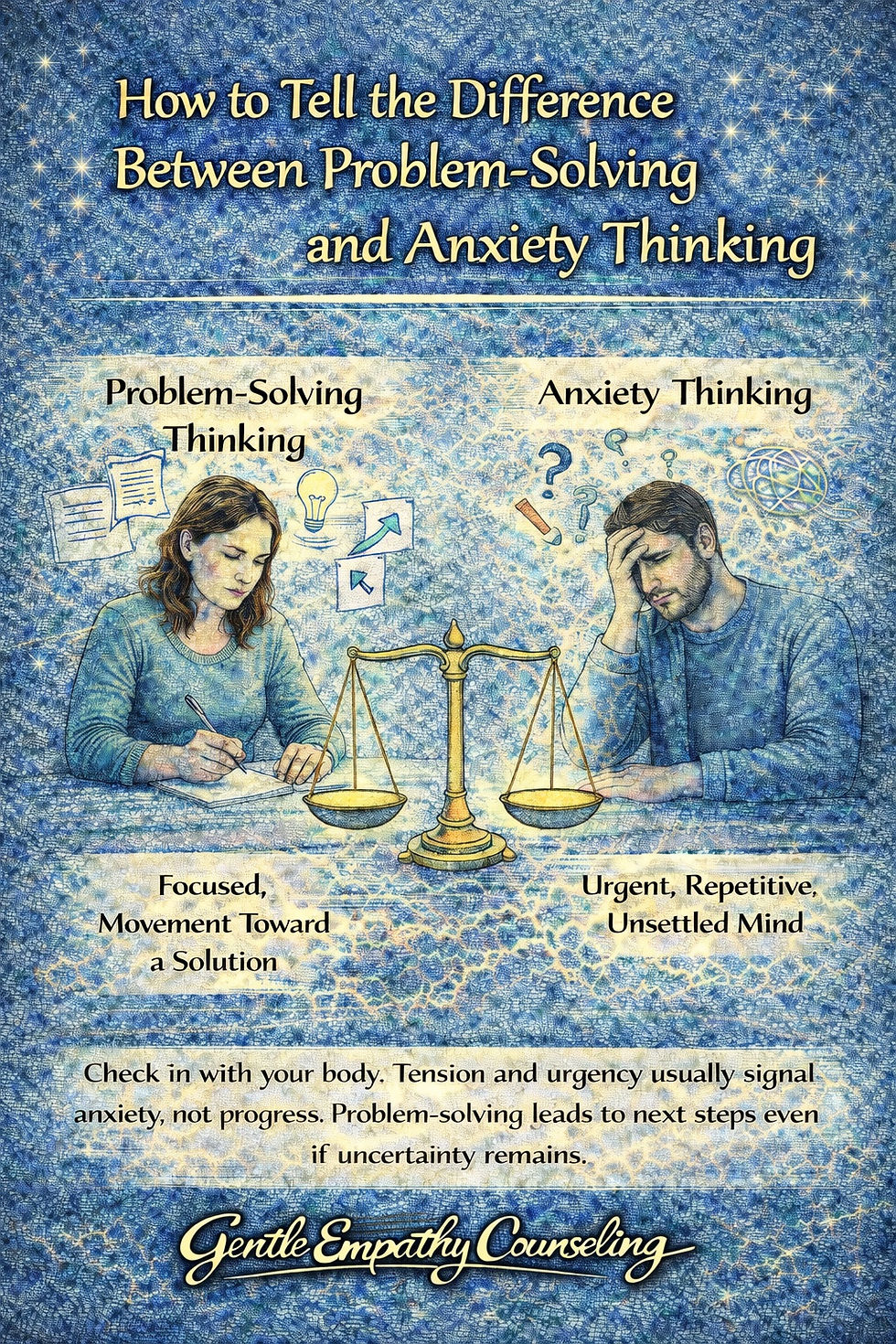
Not all thinking serves the same purpose. Some thinking moves you forward, helps you make decisions, and allows you to respond to what is in front of you. Other thinking keeps you mentally busy but emotionally stuck, even though it feels active and urgent.
Learning to tell the difference can bring real relief, especially for people who rely heavily on their minds to cope. When you understand what kind of thinking you are doing, you can respond more compassionately instead of trying to force yourself to “think better.”
When Thinking Helps
Problem-solving tends to be contained. It has a beginning and an end. You identify an issue, consider options, choose a direction, or decide on next steps.
Once the issue is addressed, your mind can rest, even if the outcome is imperfect or uncertain. There is often a sense of completion, grounding, or relief. You may still care about the outcome, but you are not mentally trapped by it.
Problem-solving may take effort and focus, but it does not usually increase anxiety over time. Instead, it supports movement and resolution, even when the solution is partial.
When Anxiety Is Driving the Thinking
Anxiety-driven thinking feels different. It carries urgency without clarity. The same questions repeat, but answers never quite land. You may feel pressure to figure something out immediately, even when there is nothing actionable to do.
Your body often stays tense. The mind feels restless or keyed up. You might notice difficulty relaxing, trouble concentrating, or a sense that something bad will happen if you stop thinking.
Instead of relief, anxiety thinking often leaves you feeling more unsettled than before. The more you think, the less resolved you feel.
Why This Distinction Is So Subtle
For thoughtful, responsible, and caring people, anxiety thinking can easily masquerade as problem-solving. It sounds reasonable. It feels productive, especially at first. You may believe that continued thinking is necessary or even responsible.
Over time, however, the lack of movement becomes noticeable. You are thinking a great deal, but nothing actually changes. Decisions feel impossible. Reassurance fades quickly. The same mental paths are traveled again and again.
Recognizing this pattern is not about policing your thoughts or judging yourself. It is about noticing how thinking feels in your body and emotions. Does it bring steadiness, or does it increase tension?
Signals That Anxiety Has Taken Over
Some gentle indicators that anxiety may be driving your thinking include mental repetition, urgency without action, difficulty tolerating uncertainty, and a sense that rest is not allowed yet.
You may also notice that thinking intensifies when you try to relax or that clarity seems just out of reach, no matter how much effort you apply. These are signs that your nervous system may be activated, not that you are failing to think correctly.
Responding Gently
The goal is not to stop thinking altogether or to force your mind into silence. It is to notice when thinking has stopped helping and started costing you peace.
Pausing, naming uncertainty, or gently shifting attention to the present moment can help interrupt anxiety-driven loops. Grounding in the body, slowing the breath, or engaging the senses can support the nervous system in settling.
These are not techniques to master or perform perfectly. They are invitations to create space and safety. Sometimes the most supportive response is allowing uncertainty rather than trying to eliminate it.
Gentle Empathy Closing
In therapy, many people learn to recognize these differences with support instead of self-criticism. Understanding how your mind works can be empowering when it is approached with kindness.
At Gentle Empathy Counseling, we help clients explore when thinking serves them and when it quietly increases anxiety. Therapy offers a steady, respectful space to develop awareness, flexibility, and relief at a pace that feels supportive rather than forced.


Comments