


How Do You Know When It’s Time to Go to Therapy?
- Brian Feldman
- Dec 15, 2025
- 4 min read

Many people begin wondering about therapy long before they ever reach out. The thought often comes quietly, sometimes late at night, sometimes in the middle of an ordinary day when something feels heavier than it should.
You might find yourself asking questions like:
Is this normal, or am I actually struggling?
Shouldn’t I be able to handle this on my own?
What if I’m not “bad enough” for therapy?
These questions are incredibly common, and they make sense. Most people do not avoid therapy because they are unaware of it. They avoid it because they are unsure whether their experience qualifies.
If you are wondering whether it might be time to consider therapy, that curiosity itself is worth paying attention to.
Why So Many People Hesitate
Many people carry quiet beliefs that keep them waiting longer than they need to. You might recognize some of these.
“I should be able to handle this myself.”
You may be capable, responsible, and used to managing things independently. Needing support can feel like a personal failure rather than a human experience.
“Other people have it worse.”
Comparing pain often leads people to minimize their own struggles. Suffering does not require a ranking system. What you are carrying matters because it is yours.
“Therapy is for people in crisis.”
This belief alone keeps countless people from reaching out. Therapy is often most effective long before things fall apart.
“I do not even know what I would talk about.”
Many people imagine therapy requires a clear problem statement. In reality, uncertainty is often the starting point.
None of these beliefs mean you are resistant or avoidant. They usually mean you have learned to survive by pushing through.
Signs Therapy Might Be Helpful
There is no single moment that signals it is time for therapy. More often, it is a pattern that begins to repeat or a feeling that no longer lifts the way it used to.
Some common signs include:
You feel stuck in the same emotional or relational patterns despite insight and effort.
Anxiety, sadness, or irritability linger longer than you expect.
You are functioning on the outside but feel depleted on the inside.
You are more reactive in relationships than you want to be.
You feel disconnected from yourself, from others, or from things you once enjoyed.
These are not signs that something is wrong with you. They are signals that something inside you is asking for attention.
The Quieter Signs People Often Miss
Not everyone who comes to therapy feels overwhelmed or distressed all the time. Some people are doing quite well by most external measures.
They show up for work.
They take care of others.
They handle responsibilities competently.
And yet, internally, something feels off.
You might notice:
You are always the strong one and rarely the supported one.
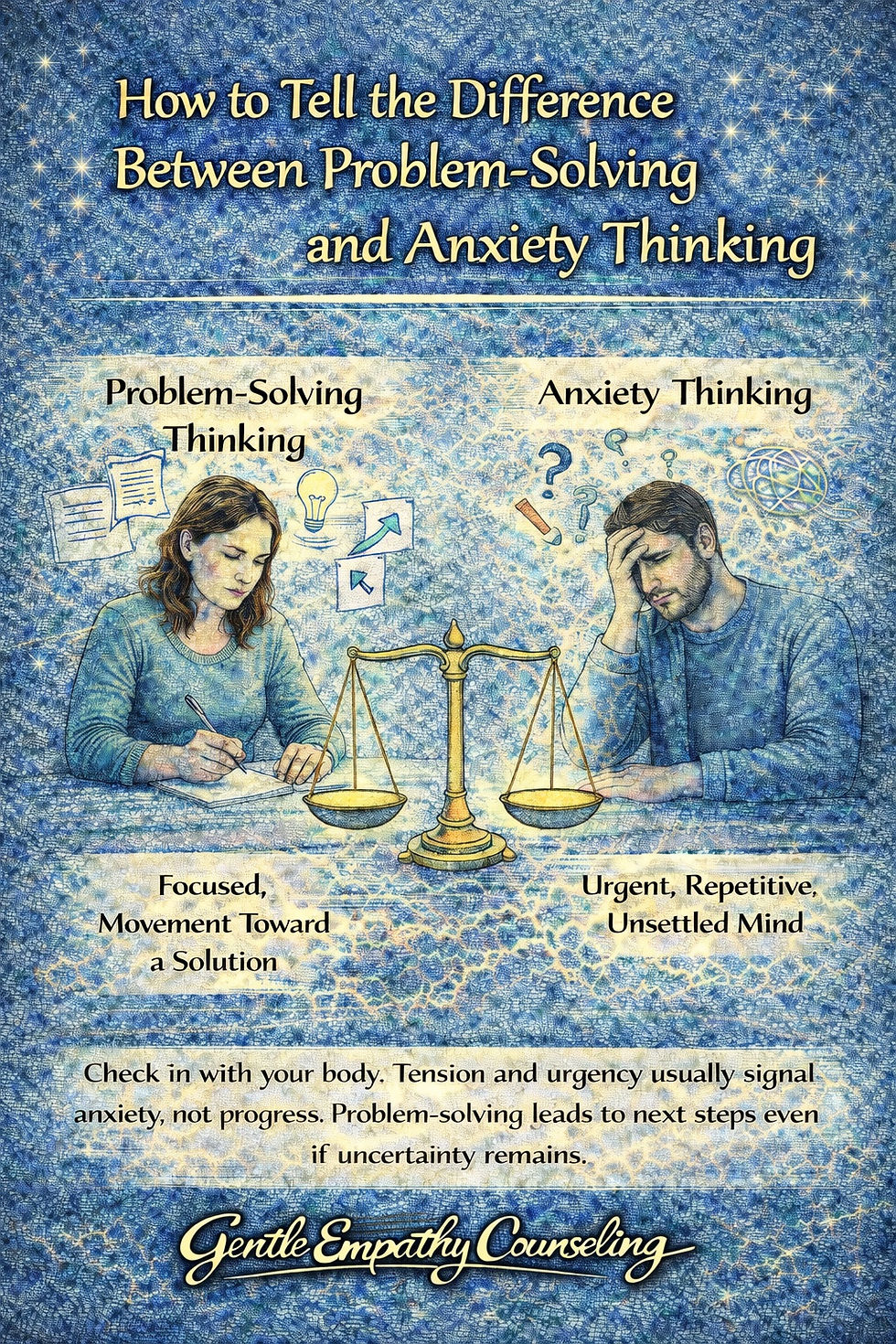
You think through problems constantly but feel no relief.
You feel lonely even when surrounded by people.
You feel tired in a way that rest does not seem to fix.
You are unsure why things that used to feel manageable now feel heavy.
These experiences are easy to dismiss because they do not look dramatic. But they are often the places where therapy does some of its most meaningful work.
What Therapy Is Actually For
Therapy is not about fixing broken people. It is not about labeling you or telling you what you should do.
At its core, therapy is a space to slow down.
It is a place to:
Understand patterns rather than judge them
Explore emotions without having to justify them
Learn how your past experiences shaped your present reactions
Develop a different relationship with your thoughts and feelings
Practice being seen and heard without needing to perform
Many people are surprised to discover that therapy feels less like problem solving and more like clarity. Over time, that clarity often leads to meaningful change.
A Gentle Reframe
Instead of asking, “Do I really need therapy?” it can be more helpful to ask a different question.
“Would support make this feel more manageable?”
Therapy does not require a crisis. It can be supportive during transitions, seasons of uncertainty, or moments when you feel emotionally stretched thin.
Just as people see a doctor to maintain physical health, therapy can be a form of emotional care that helps prevent deeper burnout or disconnection later on.
A Few Questions to Sit With
You do not need to answer these perfectly or quickly. They are simply invitations to reflect.
What feels heavier than it used to?
What patterns keep showing up despite your best efforts?
Where do you feel most emotionally tired?
What are you holding that you rarely share with others?
If support were allowed, what might it look like?
Sometimes clarity comes not from forcing an answer but from allowing the question to linger.
If You Are Still Unsure
Feeling unsure about therapy is normal. Many people schedule an initial session not because they are certain but because they want a place to talk through their uncertainty.
Therapy does not require commitment to a long process. It begins with a conversation.
At Gentle Empathy Counseling, we offer both in person and virtual counseling for individuals, couples, and families. Our approach is collaborative, compassionate, and paced according to what feels right for you.
If this post resonates, you do not have to decide anything today. Simply noticing that something inside you is asking for attention is a meaningful first step.
And when you are ready, support can meet you there.


Comments